


- By Rawat Admin
- In Academic ,
- Posted July 28, 2026
- Views 160
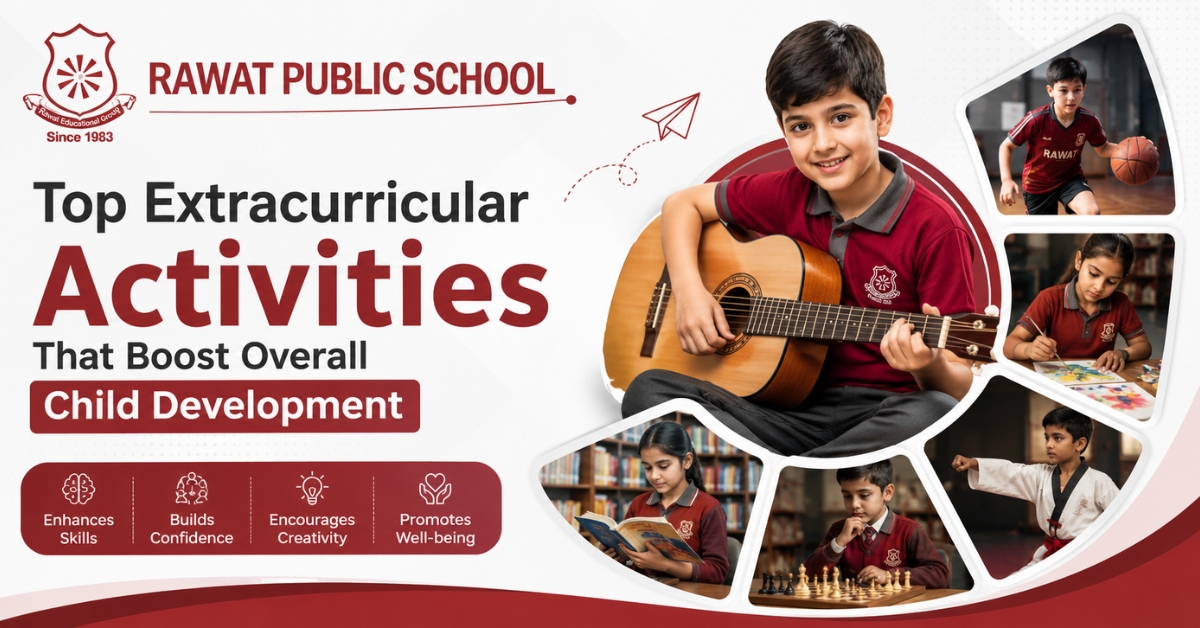
Top Extracurricular Activities That Boost Overall Child Development
Introduction: Beyond Academics — Why Extracurriculars Matter
Academics have been the focus point for years when it comes to school education. However, it is not the sole indicator of the child’s capability. Classroom performance, test scores, and grades may show his learning but his development extends beyond textbooks and examinations. This is where extracurricular activities step in.
Extracurricular activities play a significant role in shaping the child’s personality, physical health, emotional intelligence, and other skills. When a child participates in activities like music, dance, debate, robotics, or sports, he learns and develops qualities that couldn’t have been possible to learn in the classroom.
Rawat Public School focuses on providing holistic education to the students. We do not extracurricular programs as mere add-ons but as an integral part of education. Let’s read the top extracurricular activities which help in boosting the overall child development.
1. Sports Activities and Physical Development
Sports are one of the most powerful tools that help in the holistic development of children. Regular participation can help them in improving their cardiovascular health, strengthening muscles and bones, and enhancing flexibility.
- Physical Benefits: - Children who regularly participate in sports are likely to maintain a healthy body weight. They have better motor coordination and stamina which help them in performing better. Sports like basketball, football, cricket, swimming and badminton help students in living actively.
- Mental and Emotional Benefits:- Sports help in strengthening the mental and emotional health of the children. Physical activity helps the body in releasing endorphins which reduces stress and anxiety. Through physical activity, children learn coping with pressure and gain confidence.
- Social Skills Development:- Participating in sports teaches cooperation, communication, discipline, leadership, and mutual respect. Children learn to work in groups, set goals and achieve a set target. They learn to respect the rules, handle victory with humility and accepting defeat with patience. A child who learns the playground lessons can easy pass through the future challenges in life.
You Can read also:- CBSE Board Exam Pattern 2026-27: Marking Scheme & Preparation Guide
2. Art, Music & Performing Arts for Creative Growth
Creativity is an essential aspect of human development and art helps in grooming it. There are different art forms that can be practiced for improving creativity in children.
- Visual Arts:- This includes drawing, painting, craft, sculpture and design activities which help in improving imagination and fine motor skills in children. They help them in thinking independently and improving visual expression.
- Music Education:- Learning musical instruments such as guitar, piano, violin, keyboard or tabla helps in improving memory, concentration, and listening skills. Musical training given to children positively influence cognitive development.
- Dance and Drama:- Dance and drama are yet other art forms which teaches expression through body, posture, and communication. They teach emotional expression and enhance confidence level in children. Regularly performing in front of the audience helps in overcoming stage fear and building confidence.
3. Clubs & Skill-Based Programs (Robotics, Scouts, etc.)
There are different skill-based clubs in schools which focus on giving a learning experience to children beyond classroom.
- Robotics and STEM Clubs :- These clubs introduce children to science and technology, maths, and engineering through interesting hands-on projects. Students learn coding, designing, experimenting and problem- solving.
- Science and Innovation Clubs :- Science clubs make students curious and teach them about the environment around us. Children perform experiments, build models, and explore the world around them through applications of scientific concepts.
- Scouts, Guides, and Adventure Programs :- Scouting programs teach students outdoor skills, teamwork and community service. It also promotes discipline and self-reliance through camping, trekking, environmental projects and first aid.
- Debate, Quiz, and Language Clubs :- Language clubs help in teaching different languages to children, and improving communication skills. Debates and quizzes help in enhancing analytical thinking, researching abilities and general awareness.
4. Leadership Skills Through Student Councils & Competitions
Leadership skills are required to be developed and for that opportunities need to be created.
• Student Councils :- Participation in the student councils help children to represent peers, organize events, resolve conflicts, communicate with administrators and teachers and take responsibility for school initiatives. These experiences help children in learning accountability and decision-making.
• Competitions and Public Platforms :- There are debates, sports tournaments, cultural festivals, and academic competitions, which provide opportunities to the students to present their ideas and perform with competitors.
• Building Confidence :- When children learn to take responsibilities, it helps in building confidence. It doesn’t matter if the act of leadership is small like leading an assembly or coordinating in a class activity, the exposure that it offers boosts the moral of children.
You can read also:- How Can Students Deal with the Social and Mental Pressure of School?
How Extracurriculars Improve Academic Performance
It is often believed that the extracurricular activities distract students from academics. However, a proper balance of both can help in enhancing the academic performance.
- Improved Concentration : - Extracurricular activities help in improving the concentration level in students by making them physically, mentally, and emotionally strong and refreshed.
- Better Time Management :- Students who are engaged in extracurriculars managed their time accordingly. This helps them in learning time management, discipline and better organization.
- Enhanced Cognitive Skills :- Extracurricular activities help in improving concentration level, memory, reasoning and developing analytical thinking. All these cognitive skills help in better classroom learning.
- Increased Motivation and School Engagement:- When a child enjoys engaging in school activities, he is likely to feel motivated, participate actively and regularly.
- Reduced Stress :- The extracurricular activities are known for helping students in managing stress. They help students in getting mentally and physically fit by playing and letting the stress out.
Balancing Academics and Extracurricular Activities
The best way to excel in studies and participate in extracurricular activities is by maintaining a healthy balance. Giving excess time to academics and extracurriculars can make student tired and stressed. Here’s how you can maintain a healthy balance.
• Identify Interests :- Children should choose the activities according to their interest instead of joining multiple programs.
• Maintain a Realistic Schedule :- Children should enrol for activities according to their age and interest. While younger children are likely to get benefit from one or two activities, older children can increase their involvement in activities as they grow.
• Prioritize Sleep and Health :- If you want to balance the extracurricular activities and academics well then you should be fit and get proper sleep.
• Encourage Quality Over Quantity :- Children should get involved in various activities, providing beneficial learning. There should be focused participation which allow children to learn and share.
• Review Commitments Regularly:- Parents and teachers should check the learning and growth of students at least once in a while. A balanced lifestyle helps in reviewed commitment.
Conclusion: RPS’s Approach to Holistic Development
At Rawat Public School (RPS), we work towards creating a holistic environment which helps in learning and overall development of the children. We believe that every child is different and proper nurturing and opportunities should be provided to them. We encourage holistic development of the students and this is what makes us the best CBSC school in Jaipur.
We provide a wide range of opportunities to the students in the form of dance, music, drawing, etc. We encourage them to participate while also focusing on the studies.
Our school’s approach emphasizes:
- Academic excellence
- Physical fitness
- Creative expression
- Leadership development
- Ethical values
- Social responsibility
- Emotional well-being
By creating a positive environment for learning beyond classroom, we help students in becoming all-rounders or specializing in their field of interest
FAQs
1. Why are extracurricular activities important for students?
Ans. Extracurricular activities help in the overall development of students by improving physical, mental and emotional well-being. These activities help children in discovering their strengths and learning life skills.
2. Do extracurricular activities positively affect academic performance?
Ans. Yes. Extracurricular activities help in improving the concentration level and memory. They teach stress management, time management and boost morale which together help in performing better.
3. What extracurricular activities does Rawat Public School offer?
Ans. Rawat Public School offers a variety of extracurricular activities, including sports, music, dance, art, drama, robotics, debate, quiz competitions, leadership activities, cultural events, and other skill-development activities that help in holistic growth of students.
4. How can parents encourage children to take up extracurriculars?
Ans. Parents can encourage their children to participate in the extracurricular activities by providing them exposure and support. They should not pressurize them instead celebrate their efforts and help them in maintaining a healthy schedule.
5. At what age should children start extracurricular activities?
Ans. Children can begin with extracurricular activities from the age of 3 to 5 years. They can start with activities like art, dance, music, or games. As they grow up, structured and skill-based programs can be introduced.
Share on:


Latest Posts
-
Top Extracurricular Activities That Boost Overall Child Development
July 28, 2026Introduction: Beyond Academics — Why Extracurriculars Matter Acade...
-
CBSE Board Exam Pattern 2026-27: Marking Scheme & Preparation Guide
July 06, 2026Introduction: Why Understanding the Exam Pattern Matters Is your child p...
-
Amazing Science Facts in English: Mind-Blowing Trivia for Students
June 25, 2026Science is an interesting subject which is all about learning and exploring...
